Walking for Wellbeing
The most accessible thing most of us can do for our energy, mood and sleep is also the least complicated. No membership, no kit, no technique to learn — just a route out of the door and a reason to take it regularly.
Walking is not a shortcut and it is not a treatment. What it is, reliably, is a low-friction way to move more, get daylight, break up sitting and give your head somewhere to go. This hub is written for people who want to walk more often rather than further — starting out, keeping it going, and knowing when a walk is the wrong answer.
General wellbeing information only. If you have pain, a heart or breathing condition, or you are recovering from injury or surgery, speak to your GP or a qualified professional before changing how much you move.
Build a daily walk
The simplest version of a walking habit, and where to anchor it in your day.
Read this section →
Walk on your work breaks
Short outdoor breaks that break up desk time without eating your lunch hour.
Read this section →
Walk with other people
Why company makes walking stick, and how to find a group near you.
Read this section →
What you actually need
Footwear, layers, weather and route sense — nothing else required.
Read this section →Starting out without overdoing it
If walking is not currently part of your week, start with a length you are confident you can repeat: ten minutes is a real starting point, not a token one. Walk it at a pace where you could still hold a conversation. The aim in the first fortnight is repetition, not distance — you are teaching yourself that the walk happens, not proving how far you can go.
Add time before you add intensity. A rough rule that keeps most people out of trouble: increase your weekly total by around a tenth, not a third. Aches that settle within a day are normal when you are new to it; sharp pain, a limp, or swelling that lasts are reasons to stop and get advice rather than push through.
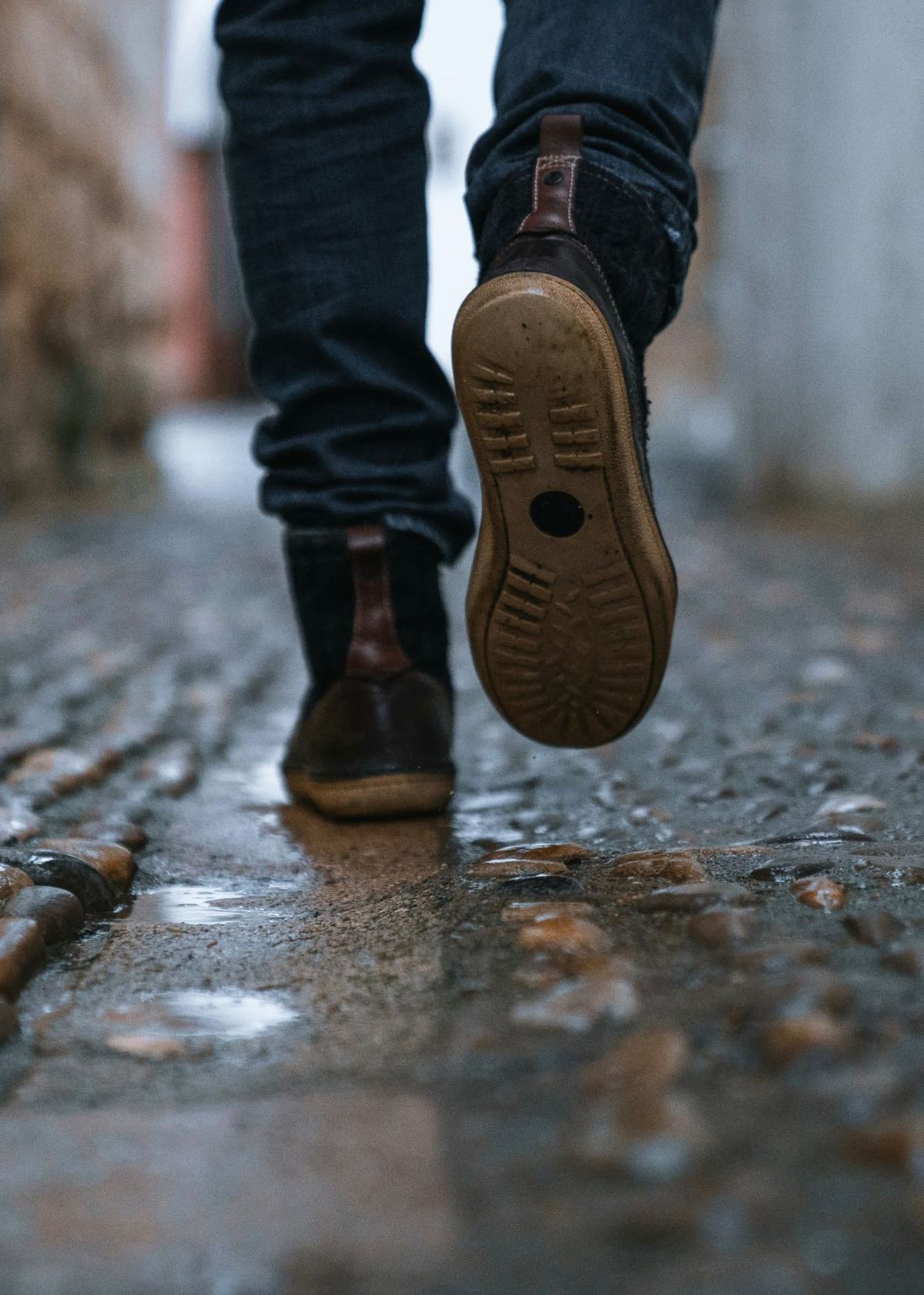
Weather is not a good reason to abandon the habit, but it does change the walk. Wet pavements, worn soles and dark evenings are the common causes of avoidable falls — shorter loops on lit streets beat a cancelled walk.
Making one walk part of the day
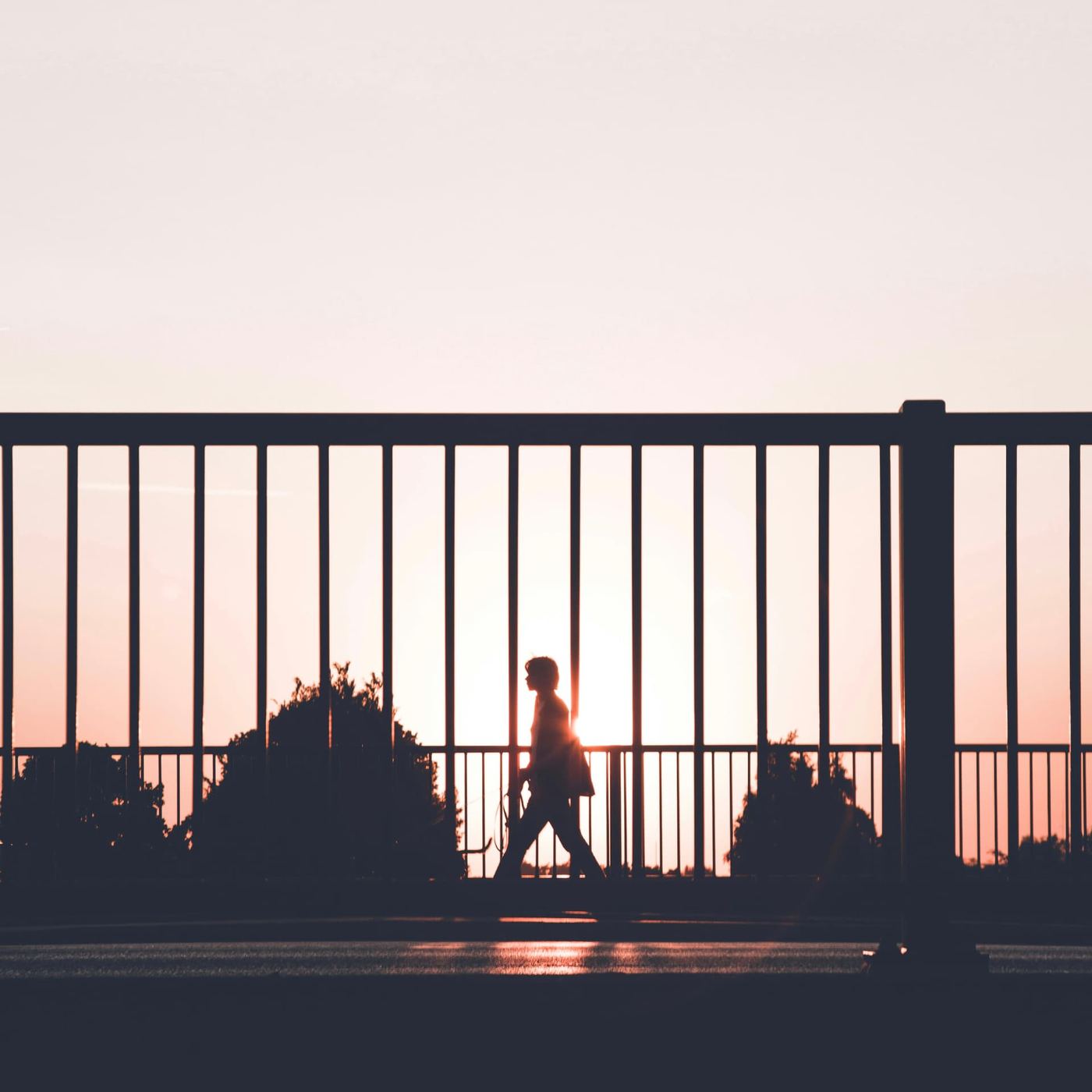
Habits stick when they are attached to something that already happens. Walk after breakfast, after the school run, at the end of the working day, or as the last thing before dinner. Pick one anchor and keep it — a walk with a fixed time needs no decision, and it is decisions that get skipped on busy days.
Morning daylight in particular helps set the body clock, which is why an early walk often shows up as better sleep rather than as more energy on the day itself. If mornings are impossible, an evening loop still counts; consistency beats timing.
If your sleep is the thing you are really trying to fix, walking is one lever among several. Our sleep hub covers the rest.
Walking as attention practice
Mindful walking is ordinary walking with your attention deliberately placed — usually on the feet, the breath, or what you can hear. When your mind wanders, and it will, you notice and come back. That noticing is the practice; there is no state you are supposed to reach.

A workable version: for the first five minutes, count four steps on the in-breath and four on the out. Then drop the counting and simply name what you notice — cold air, traffic, the sound of your own footfall. Ten minutes of this is plenty.
Leaving the headphones out for part of the walk changes it noticeably. So does taking the same route often enough that you stop navigating and start noticing. If you want structured practice alongside it, the meditation hub is the natural next step.
Green space, and why the setting matters
People consistently report feeling better after walking somewhere green or near water than after the same walk beside traffic. You do not need a national park for this — a park, a canal path, a cemetery, a scruffy patch of woodland at the edge of an estate all do the job.
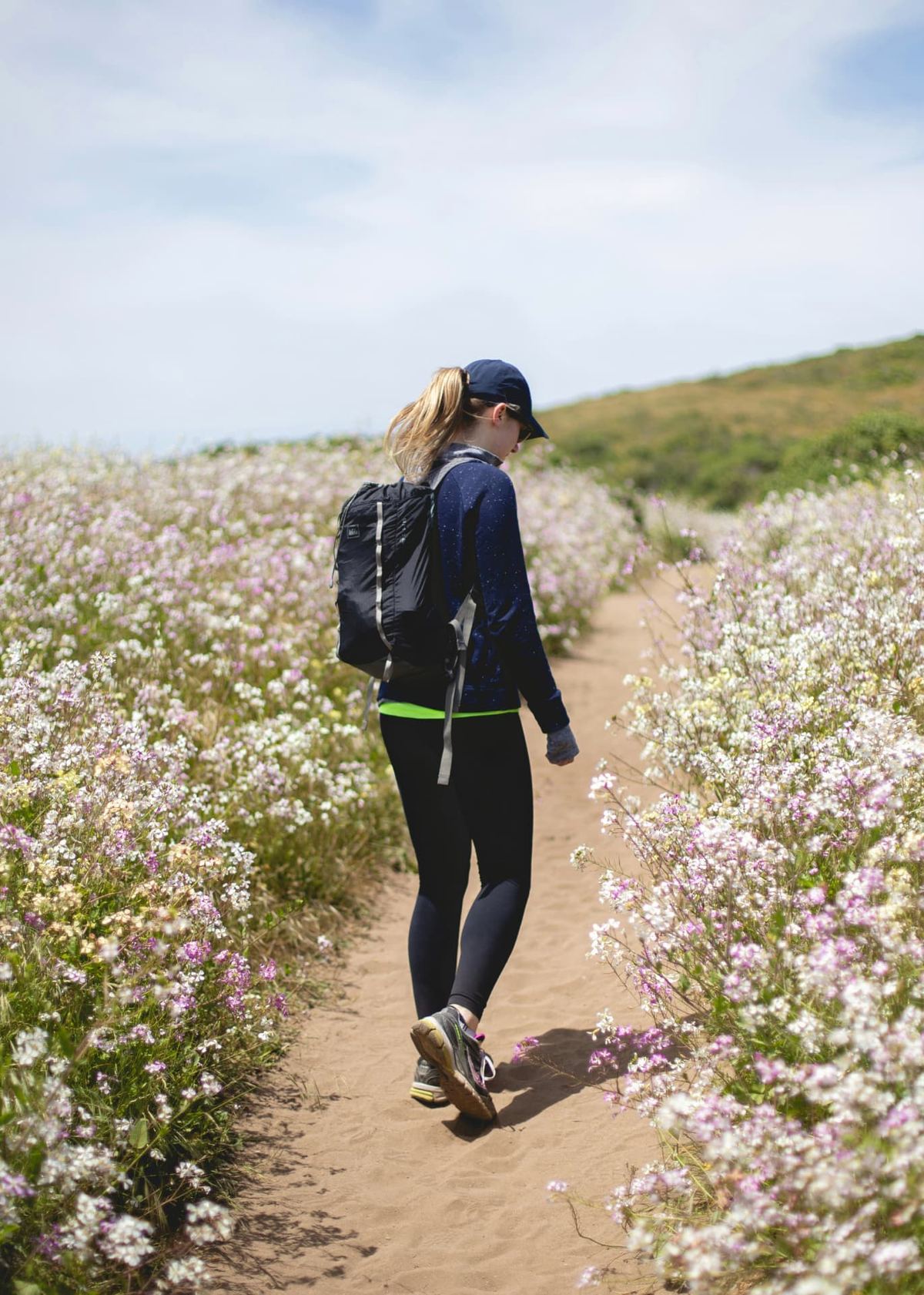
Treat the nature walk as your longer, slower one: once a week, somewhere you have to travel to, without a target pace. It is the walk most worth putting in the calendar, because it is the one that gets crowded out.
Check the route type before you go. Paths that are pleasant in June can be ankle-deep in November, and a walk you had to cut short in the wrong footwear rarely gets repeated.
Short walks that break up desk time
The problem with a desk day is rarely the sitting hour — it is the fourth consecutive one. A five or ten minute walk between blocks of work does more for concentration than the same time spent scrolling, and it is short enough to survive a busy calendar.
Two things make office walking work: a route you do not have to think about, and permission to take it. Walk a phone call rather than taking it at your desk. Get off a stop early. Use the furthest coffee shop. If you are trying to make this normal across a team rather than just for yourself, our workplace wellbeing hub covers the wider picture.
Easy walks between harder sessions
A recovery walk is deliberately easy: flat, unhurried, twenty to forty minutes, no attempt to raise your heart rate. It is used the day after hard training, or on rest days, to keep you moving without adding load.
The tell that you have got the intensity right is that you finish feeling looser than you started. If you finish tired, it was a training session, not a recovery walk. For sleep, mobility, massage and the rest of the recovery picture, see the recovery hub.
Keeping it going when motivation drops
Every walking habit gets tested — by winter, by a busy fortnight, by illness. The people who keep going are not more motivated; they have a smaller minimum. Decide now what your bad-week version is: ten minutes round the block, done, still counts.
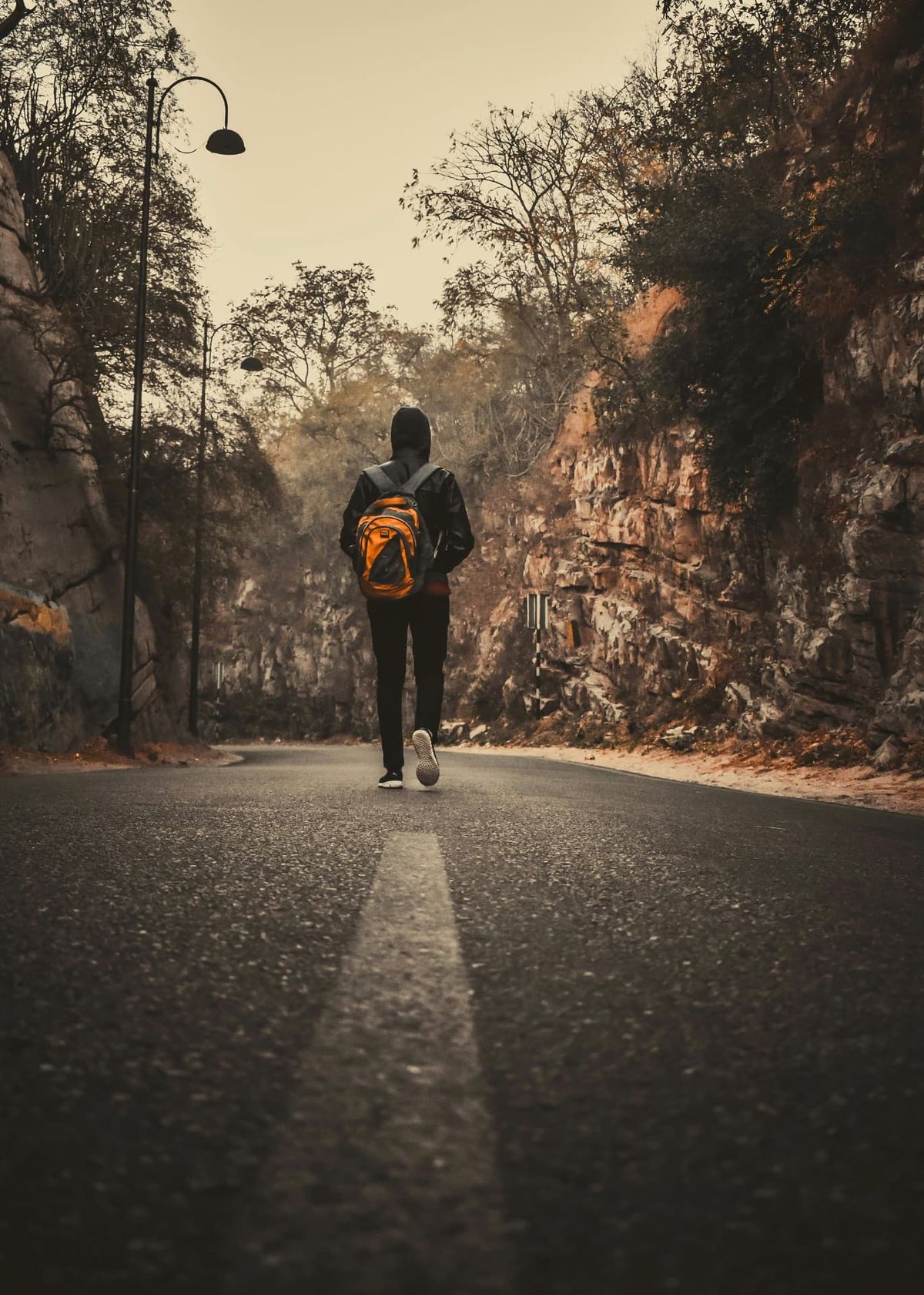
Miss one walk and nothing has happened. Miss two in a row and it is worth asking what the actual obstacle was — the time of day, the route, the shoes, the dark. Fix that specific thing rather than resolving to try harder.
Tracking helps some people and quietly ruins it for others. If a step count makes you walk more, use it. If a missed target makes you skip tomorrow, stop counting and go back to a fixed time slot.
What you actually need
For everyday walking: shoes that fit and are not worn smooth, socks that do not bunch, and layers you can take off. That is the whole list. Boots and waterproofs matter once you are heading somewhere rough, wet or remote, and not before.
For anything longer or more isolated, add water, a charged phone, and a rough idea of when you will be back. Check the light: in a British winter, a 4pm start on an unlit route becomes a torch-lit finish faster than most people expect.
Finding people and places near you
If you want help beyond a route and a pair of shoes — a coach to get you started safely, a physiotherapist if something hurts when you walk, or a group to walk with — those come from local services rather than from an article.
Browse verified wellbeing businesses in the Happy As Life directory, or start from your area in local wellness. If walking is painful rather than simply hard, that is a conversation with a GP or physiotherapist first.
Walking with other people
A walk you have arranged with someone else is the one you are least likely to skip. Company also changes what the walk is for — conversations that would be awkward across a table are noticeably easier side by side and moving.
Options worth knowing about: local health walk schemes run by councils and charities, park-based volunteer-led groups, walking sections of running clubs, and informal work walking meetings. Most are free and most are used to people turning up alone the first time. Search for what is running near you on the Happy As Life search.